
NEH Hosts Two-Day Conference on “Classical Foundations and Moral Authority”

The National Endowment for the Humanities (NEH) last week hosted a convening in Rome, Italy, that brought together Italian and American scholars, government officials, diplomats, religious leaders, and public intellectuals to examine the enduring role of the humanities in sustaining democratic societies.
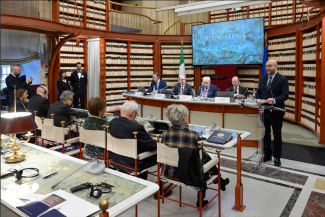
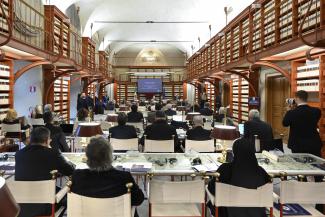
The “Classical Foundations and Moral Authority” conference, held November 9-10 at the Library of the Italian Chamber of Deputies, explored questions concerning civic trust, technological transformation, historical memory, and the moral foundations of public life through moderated discussions and keynote presentations.
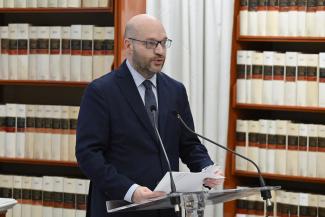
The two-day conference opened with remarks by President of the Italian Chamber of Deputies, Lorenzo Fontana, who welcomed panelists and the audience to the convening as an opportunity “to reflect on the state of our shared foundations through the valuable lens of the humanities.”
In his introductory remarks NEH Chairman Michael McDonald framed the central question of the convening: “how do Western civilization and the Western tradition of the humanities continue and contribute to the cultivation of civic life and the execution of public leadership?”
“The Western intellectual tradition forms the bedrock of our democratic institutions, our artistic achievements, and our shared cultural heritage. It provides the foundational values of liberty, reason, and open inquiry that make a free society possible. And it is our profound responsibility to preserve, study, and celebrate their legacy. Yet we may be losing it,” said McDonald. “This conference represents a vital intellectual bridge reviving the shared heritage of humanistic inquiry to address the complexities of our contemporary global order.”
An opening panel on “Rome and the Foundations of Civic Order” featuring Brian Burch, U.S. Ambassador to the Holy See, and Marcello Pera, an Italian philosopher, Senator, and former President of the Italian Senate, examined Rome’s intellectual and historical legacy and ongoing influence, focusing particularly on the value of civic virtue and its connection to the common good as defined by Greco-Roman philosophers and the American founders, and on the contributions of religion to civic and political order in the West.
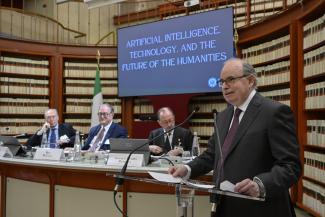
Other conference sessions considered topics such as “Law, Civic Order, and the Moral Limits of Power,” “Artificial Intelligence, Technology, and the Future of the Humanities,” “Education, Character, and Civic Formation,” “Cultural Memory, Identity, and Democratic Stability,” and “Classical Foundations of Democratic Order.”
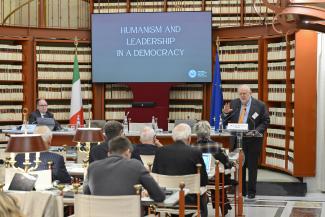
Walter Russell Mead, Alexander Hamilton Professor of Strategy and Statecraft at the University of Florida’s Hamilton Center, delivered a keynote address on “Humanism and Leadership in a Democracy.” Citing the examples of statesman such as Pericles and Winston Churchill, Mead discussed how the study of history, character, and rhetoric prepares leaders equipped to address the challenges of the global information revolution.
A conversation between Italian and American historians Franco Perfetti of Giunta Storica Nazionale and Wilfred McClay of Hillsdale College on the topic of “Why the Humanities Still Govern Us” touched on topics such as cultural relativism, the role of historians in transmitting classical values and traditions, and the concept of national character as they explored how history shapes society’s core language of freedom, authority, identity, and obligation.
The conference concluded Tuesday afternoon, November 10, with a closing panel “From Reflection to Action” in which speakers Renato Cristin from the University of Trieste, Roger Kimball, editor of The New Criterion, and R.R. Reno, editor of First Things, reflected on key moments and themes of the two-day convening and identified opportunities within education, cultural institutions, public service, and civic discussion to deepen public engagement with the history, literature, and ideas of Western civilization.
The “Classical Foundations and Moral Authority” conference was organized in partnership with the Wilson Center. The DC-based Wilson Center provides nonpartisan insights and analysis on global affairs to policymakers and the public through deep research, open dialogue, and independent scholarship.
NEH’s international engagement with foreign governments, multilateral organizations, and other international partners fosters global understanding and collaboration in the humanities. Previous international collaborations have included NEH scholarly convenings in Italy and China, work with foreign cultural agencies to sponsor international collaborative research in the humanities, and partnerships with organizations such as the Deutsche Forschungsgemeinschaft (German Research Foundation), the Hellenic Foundation for Research and Innovation, and the UK's Arts and Humanities Research Council. Learn more about NEH's international collaborations.
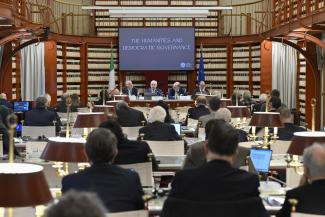
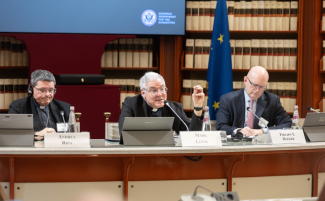
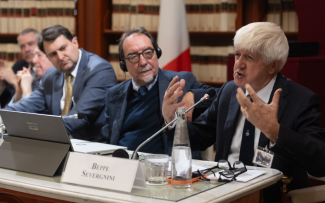
Below is the full agenda of sessions and participants for the conference:
DAY 1 – MONDAY, NOVEMBER 9
Remarks
Hon. Lorenzo Fontana, President, Chamber of Deputies
Welcome Remarks
Michael McDonald, Chairman, National Endowment for the Humanities
Opening Session: “Rome and the Foundations of Civic Order”
Moderator:
Angelo Maria Petroni, Dean, Faculty of Political Sciences, Sociology, Communication at La Sapienza University of Rome
Speakers:
- Ambassador Brian Burch, U.S. Ambassador to the Holy See
- Sen. Marcello Pera, Senator, Italian Senate
Panel: “Law, Civic Order, and the Moral Limits of Power”
Moderator:
Russell Berman, Senior Fellow at the Hoover Institution and Member of the National Council on the Humanities
Panelist:
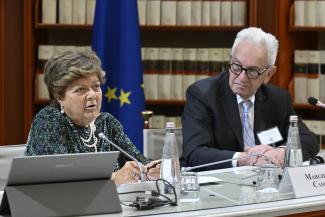
- Margherita Cassano, First President, Italian Court of Cassation
Panel: “Artificial Intelligence, Technology, and the Future of the Humanities”
Moderator:
Angelo Maria Petroni, Dean, Faculty of Political Sciences, Sociology, Communication at La Sapienza University of Rome
Panelists:
- Renato Cristin, Professor of Philosophical Hermeneutics, University of Trieste
- Wilfred McClay, Victor Davis Hanson Chair in Classical History and Western Civilization, Hillsdale College
Keynote: “Humanism and Leadership in a Democracy”
Speaker:
Walter Russell Mead, Alexander Hamilton Professor of Strategy and Statecraft, University of Florida Hamilton School
Panel: “The Humanities and Democratic Governance”
Moderator:
Angelo Maria Petroni, Dean, Faculty of Political Sciences, Sociology, Communication at La Sapienza University of Rome
Panelists:
- Roger Kimball, Editor, New Criterion
- Sen. Marcello Pera, Member, Italian Senate
- Pete Peterson, Dean of Braun Family School of Public Policy, Pepperdine University
Panel: “Education, Character, and Civic Formation”
Moderator:
David Levy, Lecturer in Philosophy, John Cabot University
Panelists:
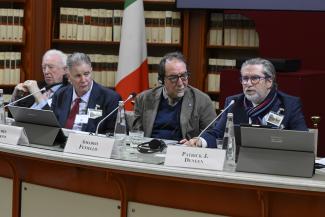
- Patrick J. Deneen, Professor of Political Science, University of Notre Dame
- Amadeo Feniello, Professor of Medieval History, University of L’Aquila
- James Hankins, Professor of Humanities, University of Florida Hamilton School
- John O’Sullivan, Commentator, President of the Danube Institute
Panel: “Humanistic Traditions in Global Institutions”
Moderator:
Ambassador (Ret.) Philip T. Reeker, Distinguished Fellow, Wilson Center
Panelists:
- Massimo de Leonardis, Professor of History of Treaties and International Politics, Catholic University of Milan
- Corrado Passera, Former Minister of Economic Development and Infrastructure, Entrepreneur and Banker
- Ambassador (Ret.) Robert Pence, Former U.S. Ambassador to Finland
- Ambassador Francesco Talò, Italy’s Special Envoy for the India-Middle East-Europe Economic Corridor
DAY 2 – TUESDAY, NOVEMBER 10
Panel: “Vatican Scholarly Encounter”
Moderator:
Ambassador (Ret.) Philip T. Reeker, Distinguished Fellow, Wilson Center
Participants:
- Bishop Andrea Ripa, Secretary, Supreme Tribunal of the Apostolic Signatura and Titular Bishop of Cerveteri
- Fr. Mark Lewis, Rector, Pontifical Gregorian University
Conversation: “Why the Humanities Still Govern Us”
Interviewer:
Wilfred McClay, Victor Davis Hanson Chair in Classical History and Western Civilization, Hillsdale College
Speaker:
Francesco Perfetti, President, Central Board of Italian Historians
Panel: “Cultural Memory, Identity, and Democratic Stability”
Moderator:
Angelo Maria Petroni, Dean, Faculty of Political Sciences, Sociology, Communication at La Sapienza University of Rome
Panelists:
- Roberto de Mattei, Professor of Modern History and History of Christianity, European University of Rome
- R.R. Reno, Editor, First Things
- Ambassador Francesco Talò, Italy’s Special Envoy for the India-Middle East-Europe Economic Corridor
Panel: “Classical Foundations of Democratic Order”
Moderator:
William English, Assistant Professor of Strategy, Economics, Ethics, and Public Policy, Georgetown University McDonough School of Business, and Member of the National Council on the Humanities
Panelists:
- Amadeo Feniello, Professor of Medieval History, University of L’Aquila
- John O’Sullivan, Commentator, President of the Danube Institute
- Pete Peterson, Dean of Braun Family School of Public Policy, Pepperdine University
- Beppe Severgnini, Journalist, Corriere della Sera
Closing Panel: “From Reflection to Action”
Moderator:
Michael McDonald, Chairman, National Endowment for the Humanities
Panelists:
- Renato Cristin, Professor of Philosophical Hermeneutics, University of Trieste
- Roger Kimball, Editor, New Criterion
- R.R. Reno, Editor, First Things
National Endowment for the Humanities: The National Endowment for the Humanities supports research and learning in history, literature, philosophy, and other areas of the humanities by funding selected, peer-reviewed proposals from around the nation. Additional information about the National Endowment for the Humanities and its grant programs is available at neh.gov.